
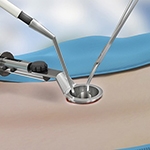
Advances in surgical technique are transforming how spine conditions are treated — with smaller incisions, less pain, and faster return to the life you love.
For decades, open spine surgery meant large incisions, days in the hospital, and months of recovery. Today, that picture has changed dramatically. Minimally invasive spine surgery (MISS) allows surgeons to treat a wide range of spine conditions through tiny incisions — sometimes less than an inch — using specialized instruments and real-time imaging guidance. The result is less disruption to the muscles and tissues surrounding the spine, which translates directly into less post-operative pain and a faster return to normal activity.
What Is Minimally Invasive Spine Surgery?
Minimally invasive spine surgery is an umbrella term for a range of procedures designed to achieve the same surgical goals as traditional open surgery — but with significantly less collateral damage to the surrounding tissue. Rather than making a long incision and pulling back muscle to access the spine, surgeons use tubular retractors or endoscopes that gently separate muscle fibers rather than cutting through them.
Intraoperative fluoroscopy (real-time X-ray) or navigation technology guides the instruments precisely to the target area. This precision is key to achieving excellent outcomes through small working corridors that would be impossible to navigate without the right technology.
Conditions Commonly Treated
MISS techniques can address a broad spectrum of spine conditions, including:
- Herniated discs (cervical and lumbar)
- Lumbar spinal stenosis
- Degenerative disc disease
- Spondylolisthesis (slipped vertebra)
- Spinal instability requiring fusion
- Vertebral compression fractures
- Spinal tumors (selected cases)
- Foraminal stenosis causing nerve compression
Key Benefits Over Traditional Open Surgery
The advantages of minimally invasive approaches are well-documented in the surgical literature and are felt most acutely by patients in the days and weeks following their procedure.
Less Post-Operative Pain
Because MISS techniques preserve the integrity of the paraspinal muscles — rather than stripping them from the spine as in open surgery — patients consistently report lower pain scores after surgery. This also means reduced reliance on opioid pain medications, which carries important safety and recovery benefits.
Reduced Risk of Infection and Blood Loss
Smaller incisions mean less exposed tissue, which directly reduces the risk of surgical site infection. Blood loss is also substantially lower in most MISS procedures, reducing or eliminating the need for blood transfusions.
Shorter Hospital Stays
Many minimally invasive spine procedures are now performed on an outpatient basis or require only a single overnight stay. Patients who once faced three-to-five day hospital admissions are often going home the same day or the morning after surgery.
Faster Return to Activity
Recovery timelines vary by procedure, but MISS patients typically return to light activity within days to weeks, compared to months for open spine surgery. For working professionals and active individuals, this difference is life-changing.
Am I a Candidate for Minimally Invasive Surgery?
Not every spine condition or every patient is best served by a minimally invasive approach. The right surgical strategy depends on the specific anatomy and pathology, the severity and duration of symptoms, prior surgical history, and overall health status. Some complex or multi-level cases still benefit from open surgical techniques that provide wider exposure.
A thorough consultation with a fellowship-trained spine surgeon — including a review of your imaging studies and a detailed discussion of your goals — is the essential first step in determining whether MISS is the right choice for you. The goal is always the approach that gives you the best outcome with the least risk and the fastest recovery.
If you are living with back pain, leg pain, or spine-related symptoms that haven't responded to conservative treatment, a consultation with a spine surgeon can help clarify whether minimally invasive surgery is right for you. Early evaluation leads to better options and better outcomes.


