
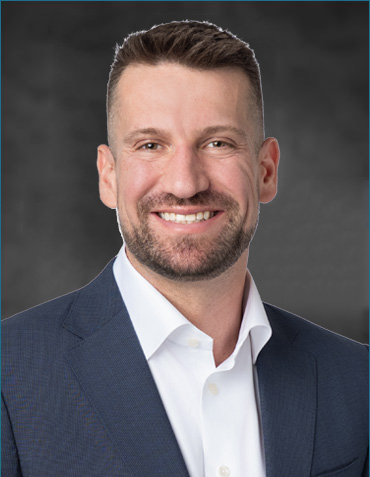
James Nuttall, M.D. Orthopaedic Surgeon (staff listed below)
Henry Gonzalez – Medical Assistant ([javascript protected email address])
Javier Jimenez – Surgery Scheduler ([javascript protected email address])
Jennie Worrell PA-C – Physician Assistant ([javascript protected email address])
Dr. James Nuttall is a double-board certified orthopaedic surgeon with membership to both the American Board of Orthopaedic Surgery and the Royal College of Surgeons of Canada.
Dr Nuttall believes in a patient-centered approach for all aspects of medical care including decisions for surgery. He believes that empowering patients with relevant and honest information regarding the risks and benefits of any surgical procedure is critical to optimal patient outcomes and post-treatment quality of life. Full consideration of all available operative and non-operative treatments for any orthopaedic concern is taken as part of any treatment plan he develops with his patients.
Dr Nuttall graduated from Cornell University with a degree in biology, focusing on genetics and development. A long-time athlete in competitive sports, Dr Nuttall was a member of Cornell’s NCAA Division I rowing team. During his undergraduate years he contributed to primary research into the characterization of the genetics of tumor formation, which included clinical outreach to families afflicted by a genetic pre-disposition to certain cancers. Before starting medical school, Dr Nuttall conducted research for the prestigious Samuel Lunenfeld Research Institute of Mt Sinai Hospital in Toronto, furthering the understanding of the relationship between autoimmune disease-related genes and the formation of solid organ tumors. During this time, Dr. Nuttall also served as the head coach of the Women’s Rowing Team of the University of Toronto.
Subsequent to his research work at Mt Sinai, Dr Nuttall attended medical school at the Royal College of Surgeons in Ireland, one of the oldest and most prestigious surgical training schools in the world. Over its long history, the College has contributed heavily to the development of surgical care procedures and technologies including, most recently, the development of novel orthobiologics for the treatment of deep bone infections. During his time at the RCSI Dr Nuttall was involved with research focused on improving surgical teaching with electronic simulation technologies to reduce the need for animal models in surgical training. Dr Nuttall was recognized as a top-performing student in multi-national competitions, demonstrating his comprehensive knowledge of surgical treatment.
Dr Nuttall completed residency at McMaster University, a world-renowned center for research in evidence-based medicine and a pioneering center for the use and development of randomized controlled trials in orthopaedic surgery. McMaster University is a level one trauma center with a high-throughput, comprehensive orthopaedic program, treating thousands of patients each year. As a result, Dr Nuttall had exceptional exposure to all orthopaedic concerns and treatments, including primary joint replacement, trauma, and orthopedic oncology, among others. In recognition of his outstanding skills, Dr Nuttall was named Chief Resident for his final year.
In addition to his primary surgical training at McMaster, Dr Nuttall was actively involved in the research activities of his mentor, Dr Michelle Ghert, former president of the Musculoskeletal Tumor Society (MSTS), the pre-eminent society for limb salvage in North America. Dr Nuttall’s work included published research validating the statical underpinnings of the first randomized control trial in orthopaedic oncology.
After residency, Dr Nuttall continued his training and research, completing his fellowship in limb salvage, complex reconstruction, and orthopaedic oncology at Rutgers New Jersey Medical School under the leadership of Dr Joseph Benevenia, also a past president of MSTS. While at Rutgers, Dr Nuttall was involved in research related to custom implant design, validation, and the development of silver-based implant coatings for the prevention of infection. He also gained comprehensive experience with the use of fully custom implants in instances when no commercial solution existed to address a specific patient’s unique needs. Dr Nuttall is one of fewer than 400 orthopaedic surgeons nationally trained to perform limb salvage procedures.
After fellowship Dr Nuttall developed an active practice in Indiana focusing on general orthopedics and total joint arthroplasty where he served as a local expert for revision and complex total joint arthroplasty, orthopaedic oncology, and the management of metastatic disease. During his time in Indiana, Dr Nuttall gained extensive experience with robotic arm-assisted total joint arthroplasty. He was one of the earliest in-state adopters of this technology, benefiting patients with improved implant placement accuracy, less damage to local tissue, faster post-operative recovery, and improved post-operative range of motion.
In his small group practice, Dr Nuttall was actively involved in the development of a multi-disciplinary approach to joint replacement culminating in the recognition of the orthopaedics program as one of the top three programs in Indiana as per healthgrades.com. The program was recognized for its outstanding performance in multiple post-operative outcomes including a 44% reduction of in the occurrence of common complications compared to the in-state benchmark.
Dr Nuttall brings the expertise of three countries and a multidisciplinary approach to patient care developed to treat the most complex orthopedic cases.
Dr Nuttall’s areas of expertise include:
- General orthopaedics
- Trauma and fracture care
- Arthritis Care
- Peripheral nerve surgery
- Soft tissue conditions
- Primary joint replacement of hip, knee, shoulder
- Robotic arm assisted total joint replacement
- Patient-specific instrumented total joint replacement
- Muscle sparing and less-invasive total joint arthroplasty
- Direct anterior total hip replacement
- Alternative approach bikini line approach direct anterior total hip replacement
- Small joint replacement including elbow and ankle
- Alternative and non-joint replacement pain control techniques for joint pain including minimally invasive and open capsular nerve ablation
- Revision arthroplasty
- Management of infected total joint arthroplasty
- Salvage procedures in failed total joint arthroplasty, including resection arthroplasty and joint fusions
- Primary bone and soft tissue tumor management
- Navigated tumor resection
- Management of metastatic disease to bone
- Limb salvage
- Upper and lower extremity amputation with advanced peripheral nerve management
- Regenerative peripheral nerve interface surgery (RPNI)
- Targeted muscle reinnervation (TMR)


